India Pakistan Tension Over the Indus River: Water, Power, and the Politics of Survival

By: Mahrukh Ashfaq (mahrukhashfaq437@gmail.com)
The dispute between India and Pakistan over the Indus River has turned into a big problem in South Asia. The river is crucial for both countries because many people rely on it for water, farming, and generating electricity. Recently, the growing political conflict between the two nations has made people more worried about how water will be shared in the future.
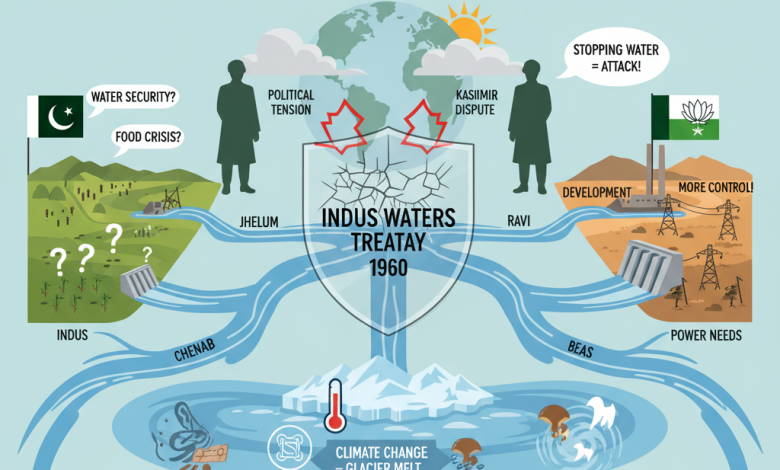
The Indus River system consists of six major rivers: Indus, Jhelum, Chenab, Ravi, Beas, and Sutlej. In 1960, India and Pakistan agreed on the Indus Waters Treaty with the help of the World Bank. Under this treaty, Pakistan was given control of the western rivers: Indus, Jhelum, and Chenab. India was allowed to manage the eastern rivers: Ravi, Beas, and Sutlej. This agreement is seen as one of the most successful water-sharing deals in the world because it has lasted even through wars and political disagreements.
But in recent years, disagreements over water projects and dams have caused new tensions. India has been constructing hydroelectric projects on rivers that flow into Pakistan. Indian officials say these projects are allowed under the treaty and are important for development and power. Pakistan, however, is worried that these projects might reduce the water flowing into its area, which could hurt farming and daily life.
Pakistan is very much dependent on the Indus River system. Most of its farming is based on river water. Farmers use this water to grow crops like wheat, rice, sugarcane, and cotton. Experts warn that a big drop in water supply could cause serious economic and food issues for the country.
The situation has gotten worse since political tensions increased between India and Pakistan over Kashmir and other security issues.
Strong statements from both countries’ leaders have made people fear that water might become a new part of the political conflict. Some Pakistani leaders have said that stopping water flow would be seen as an attack. At the same time, some Indian political groups are pushing for more control over river resources.
Experts say that India can’t completely stop Pakistan’s water supply without building huge dams and storage systems. However, even small changes in water flow or delays in sharing information can cause problems for farmers and local communities. Because of this, many people in Pakistan are worried about what the future holds.
Climate change is also making the situation harder. South Asia is already dealing with floods, droughts, and rising temperatures. The glaciers in the Himalayas, which supply water to the Indus River, are melting because of global warming. Scientists warn that climate change might reduce water availability in the future and increase competition over natural resources.
Many experts believe that both countries should solve the issue through peaceful talks instead of using political pressure. Water experts say cooperation is necessary because millions of people depend on the river system. They also think updating the treaty through discussion could help deal with modern challenges like climate change and population growth. International organizations are also concerned about the growing tensions.
Analysts say the Indus Waters Treaty has lasted over sixty years because both countries recognized the importance of water cooperation. They warn that breaking this agreement could lead to more instability in the region.
Ordinary people on both sides are also anxious. Pakistan’s farmers fear water shortages, while people in India support development projects that bring electricity and economic benefits. Many citizens believe that peaceful relations and proper water management are essential for the future of South Asia.
In short, the Indus River issue is more than just a water problem. It is now tied to politics, security, climate change, and regional stability. Although tensions continue between India and Pakistan, experts think that working together and having open discussions are the best ways to solve the problem. The Indus River supports millions of lives, and both countries need to carefully manage the situation to avoid things getting worse.